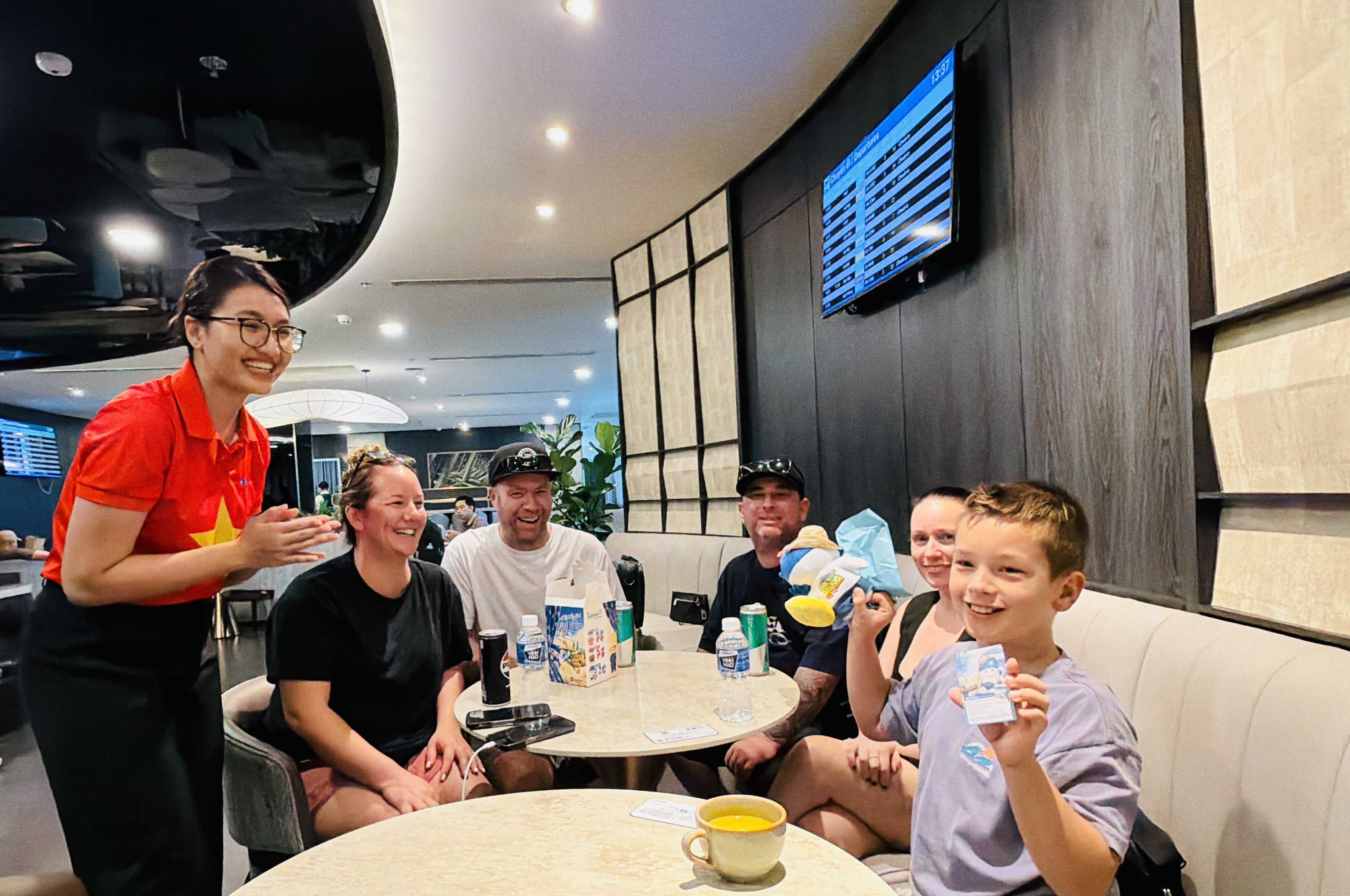
A small gift at the airport carrying the message “Magical Vietnam.”
27/08/2026 10:42
During the National Day holiday from August 28 to September 2, 2026, Tan Son Nhat International Airport is expected to serve approximately 130,000 passengers per day, with an average of around 780 arriving and departing flights each day.
Against this backdrop of heightened travel activity, SASCO has chosen an approachable way to introduce the unique character of Vietnam’s destinations.
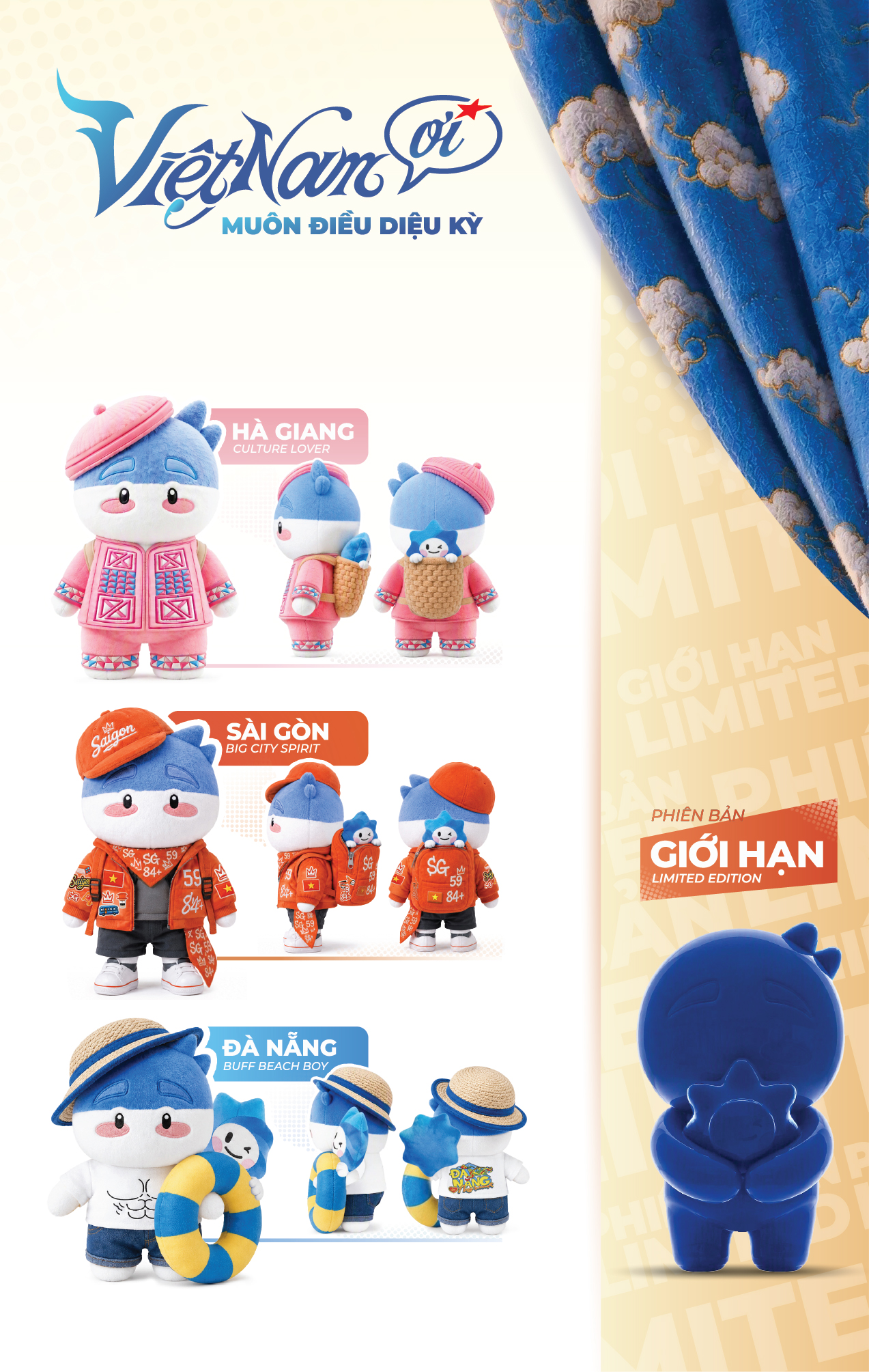
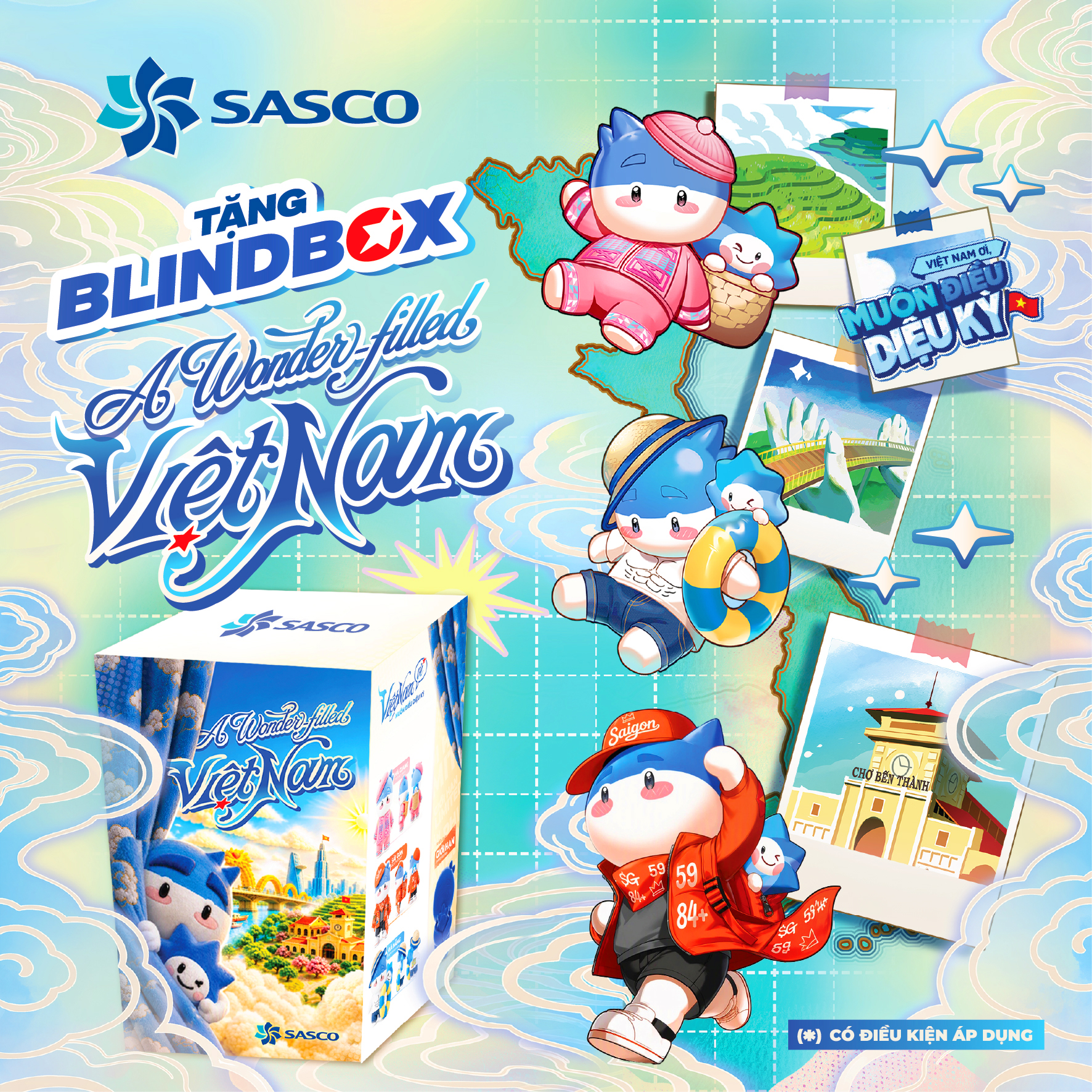
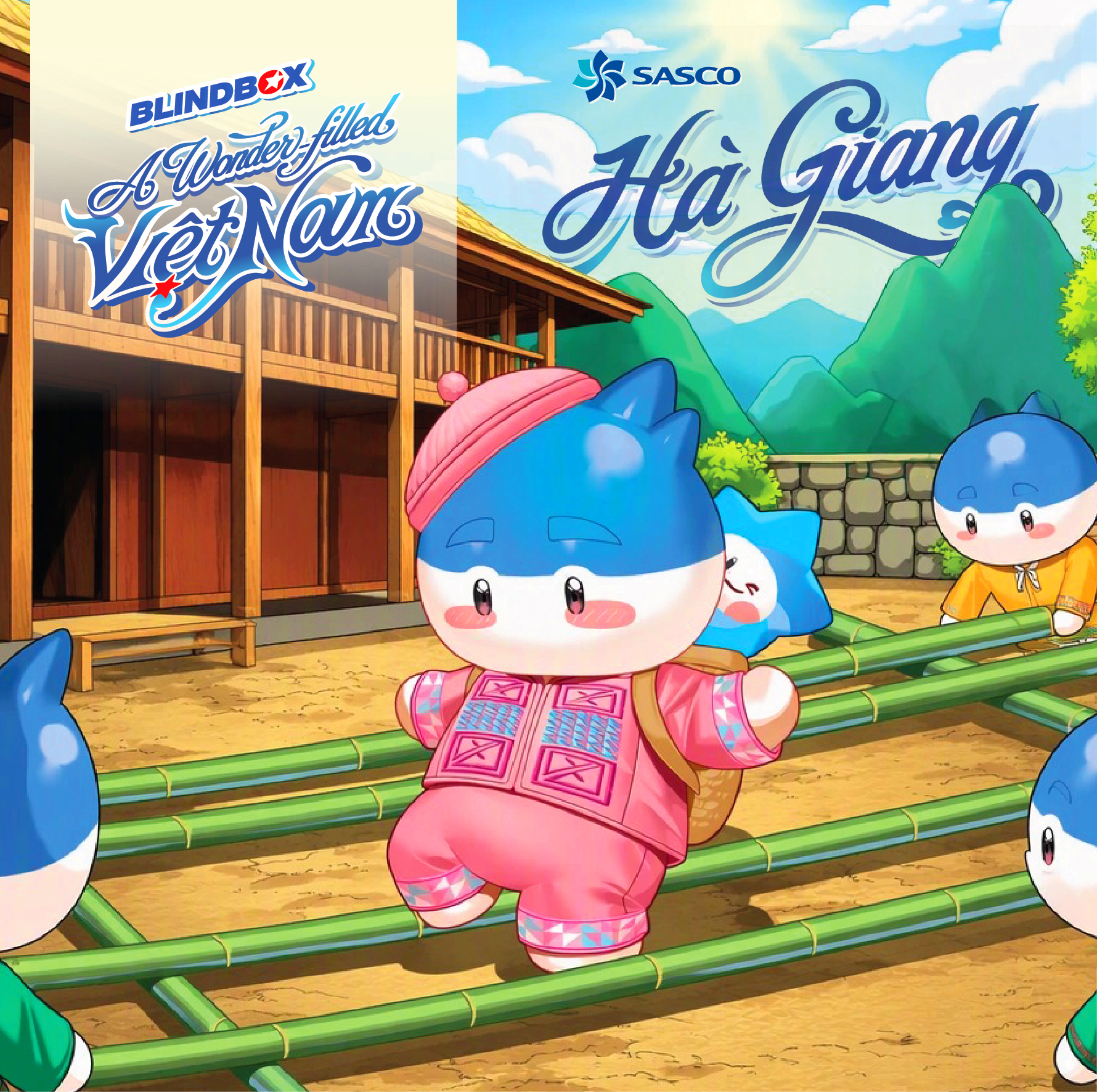
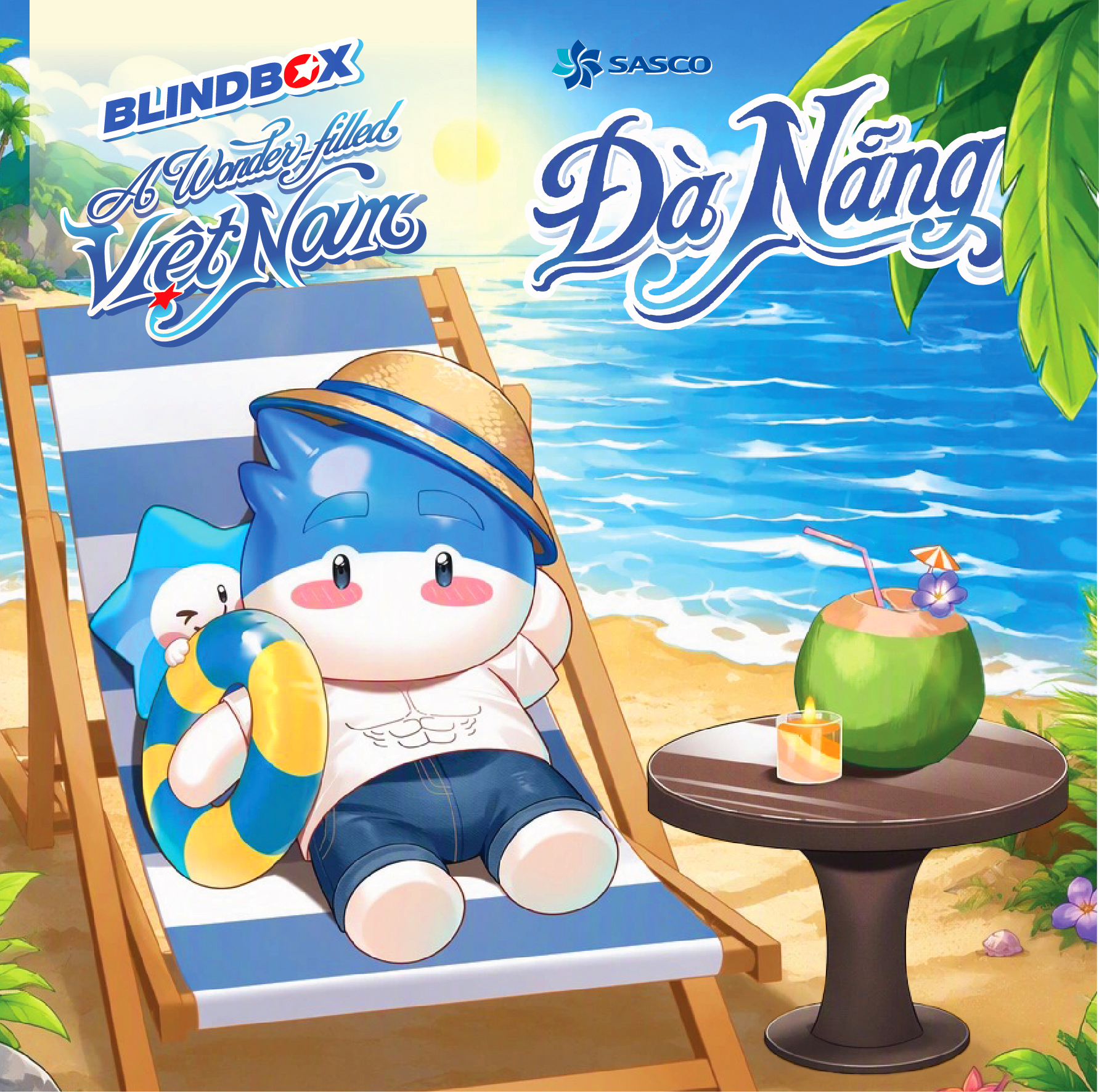
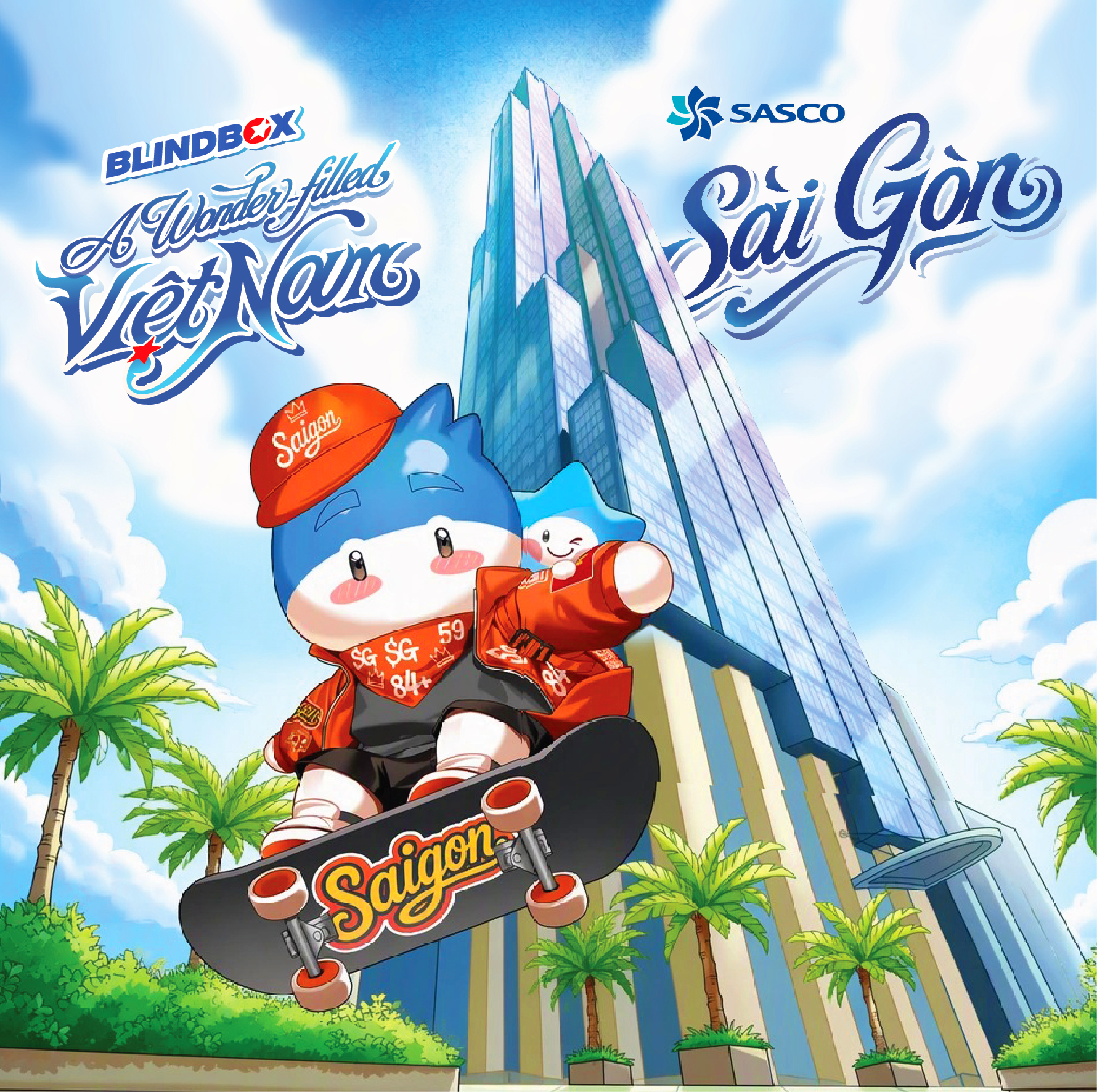
Ha Giang, Da Nang, and Saigon are the first destinations featured in the surprise gift collection “Magical Vietnam.” Each box features a special edition of Jupi & Cyon – SASCO’s two mascots – inspired by a different destination, accompanied by a story card highlighting the local culture, cuisine, and way of life.
Recipients do not know in advance whether they will receive the Ha Giang, Da Nang, or Saigon edition. Only upon opening the box is the journey of Jupi & Cyon revealed, offering a small glimpse of a destination that may inspire their next trip.
Ha Giang – The Colors of the Lo Lo People Amid the Rocky Plateau
Amid the gray limestone landscapes and winding roads along the mountainsides, the Lo Lo community creates a distinctive cultural identity through vibrant traditional clothing, communal ways of life, and customs preserved across generations.
Lo Lo women’s traditional attire is crafted from numerous small pieces of fabric, combining geometric patterns with intricate handmade details. Set against the dramatic backdrop of the rocky plateau, these vivid colors stand out so strikingly that they have become almost a visual signature of the community. For travelers, the clothing is more than a beautiful subject for photographs; it offers a window into how the Lo Lo people perceive nature, community life, and the preservation of their cultural identity.
Throughout their journey, Jupi & Cyon step into the world of the Flower Lo Lo people, observing their traditional clothing, experiencing the rhythm of village life, and discovering cultural practices that remain part of everyday life today.
Lo Lo culture is preserved through folk songs, traditional dances, handicrafts, and community rituals, including rain-praying ceremonies, village cleansing rituals, and ancestor worship. In Lo Lo spiritual life, bronze drums also hold a special place, playing an important role in many significant ceremonies.
The Ma Pi Leng Pass, Nho Que River, and endless stretches of limestone mountains create Ha Giang’s first and most striking impression. Yet, as travelers venture deeper into local life, the destination reveals a richer story, one shaped by its people, collective memories, and cultural values passed down from one generation to the next.
Da Nang – The Rhythm of Coastal Life, from the Morning Market to the City Lights
Da Nang has a rhythm of coastal life all its own: the day begins early with fresh catches arriving from the sea, flows into the lively atmosphere of local markets, and gradually slows as evening falls.
To experience this side of the city, one can start with an early morning in Man Thai. While much of the city has yet to wake up, the beach is already alive with boats returning to shore, fishermen hauling in their nets, vendors sorting fresh catches, and baskets of seafood being quickly transported from the sea to the market.
In recent years, Da Nang’s tourism industry has also incorporated sunrise fish-market experiences into its offerings, giving visitors an opportunity to experience the daily lives of local fishermen rather than simply viewing the sea from a resort.
From the sea to the city, Con Market offers a vibrant taste of Quang-style cuisine: mi Quang, banh trang cuon thit heo (pork wrapped in rice paper), a variety of traditional cakes and snacks, and the bold, distinctive flavors of Central Vietnam. Naturally, Jupi & Cyon make a stop at Con Market to “find something delicious to eat.”
The sea remains an inseparable part of the city. My Khe Beach is only a few kilometers from the city center, making the coast feel almost seamlessly connected to urban life. Mornings bring locals out for exercise, while in the afternoon, residents and visitors return to the beach. As night falls, the city’s energy shifts toward the Han River and its iconic bridges.
This close connection between the sea, markets, river, and city streets creates something special: Da Nang has all the energy of a modern tourist city while still preserving the everyday rhythms of a Central Vietnamese coastal community.
You can spend an entire day exploring different places, but there is also nothing wasted about simply sitting by the sea as the afternoon fades, enjoying a local dish and watching the city light up.
This is the Da Nang that Jupi & Cyon choose to capture in “Magical Vietnam”: rather than trying to collect as many famous attractions as possible, they embrace a day at an unhurried pace—crossing bridges, visiting the market, tasting local delicacies, and ending the day by the sea.
A simple slice of everyday life, yet one that captures the rhythm of the city in its own way.
Saigon – A City Shaped by Encounters
If there is one characteristic that best captures Saigon, it may be its remarkable ability to embrace diversity. Over more than three centuries of development, the city has welcomed generations of people from different places, each bringing their own accents, cuisines, customs, and ways of doing business. These encounters have shaped an urban landscape where old and new, traditional and modern, often exist just steps apart.
To understand Saigon, you do not necessarily have to start with a famous landmark. Instead, try turning into a small alleyway. A house may open its ground floor as a local food stall. A few plastic chairs can become a neighborhood café. As evening approaches, the familiar sound of a street food cart signals the arrival of a bowl of hu tieu. People living in the alley know one another, small businesses blend naturally into residential spaces, and everyday life unfolds almost right outside people’s doorsteps.
These alleyways are, in many ways, an essential part of Saigon’s culture.
Food also tells the story of a city shaped by cultural encounters. Com tam, Phnom Penh-style hu tieu, banh mi, Cantonese dishes in Cho Lon, Central Vietnamese specialties, Northern cuisine, and countless other flavors coexist across a culinary landscape with almost no clear boundaries.
And then there is coffee. It does not necessarily have to be enjoyed in a beautiful café. Sometimes all it takes is a low plastic chair, a glass of iced coffee, and a little time spent watching the traffic go by. The way people drink coffee says something about Saigon: in a city that always seems to be in a hurry, people still take the time to sit down, talk, read the newspaper, or simply watch the streets unfold.
For “Magical Vietnam,” these everyday details become the defining elements of the Saigon edition. Because sometimes, the best way to tell the story of a city is not to list the places visitors should see, but to show them how the people who live there eat, live, and come together.
BOX: Receive Your “Magical Vietnam” Gift at Tan Son Nhat
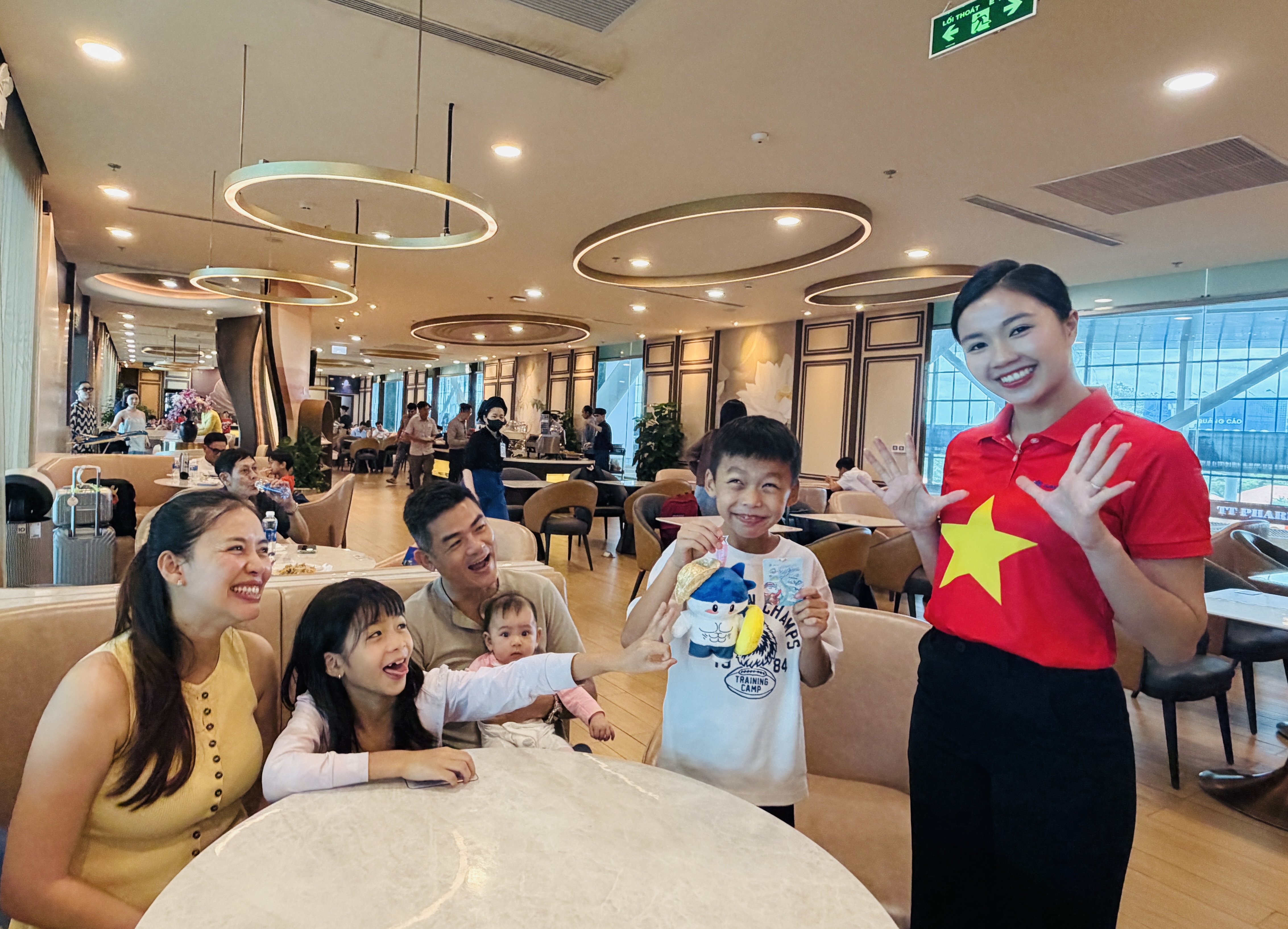
From August 29 to September 2, 2026, SASCO will launch the “Magical Vietnam” surprise gift program across its lounge system at Tan Son Nhat International Airport. Each gift box features one of three SASCO mascot editions inspired by Ha Giang, Da Nang, or Saigon, with details reflecting the local culture, cuisine, and everyday life of each destination.
The program is available to passengers whose names contain any of the following words: Viet, Nam, Quoc, Khanh, Tu, or Hao, who use the business-class lounge during the applicable hours and register for SASCO Infinite Club.